
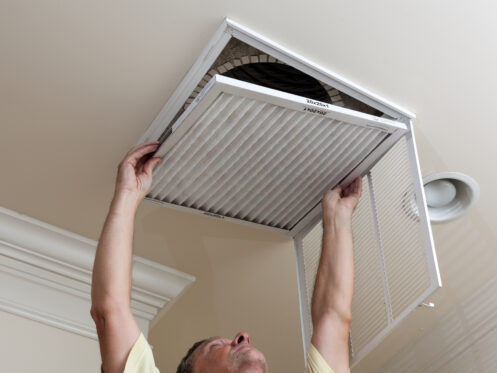
Most homeowners are aware they need to change their HVAC filter periodically. However, this task is often neglected. A clean filter in your HVAC system can promote healthy indoor air quality, adequate airflow, and protect your heating and cooling equipment. While replacing your air filter less frequently may seem cost-effective, this kind of approach comes with hidden costs. If you’re not sure how often you should replace your filter, reach out to our team at Pro Heating and Cooling, Inc. for assistance. We can help you find a simple and affordable solution to filter maintenance.
HVAC Problems Caused by a Dirty Filter
A dirty HVAC filter can lead to you running your heating and cooling equipment more often than normal. Whether you’re trying to deal with poor indoor air quality or uncomfortable air, a dirty filter will impede the normal process of filtration and heating/cooling. Over time, overuse of your HVAC system can lead to equipment strain. You may notice that you’re scheduling frequent repairs for things like your blower motor, compressor, heat exchanger, or evaporator coil. Emergency appointments in Hillsboro, OR can include additional fees, negatively impacting your household budget. Even if you have warranty coverage in place for your HVAC system, normal wear and tear or lack of maintenance don’t apply. You will likely be responsible for covering any expenses related to filter neglect. This includes both parts and labor.
High Energy Bills
With more frequent use of your HVAC system comes an increase in energy consumption. This not only increases your carbon footprint but also leads to high utility bills. If you notice your monthly energy bill increasing slowly, check to see if you need to replace your filter. Your HVAC system may be working hard to pull air through a dirty filter, lengthening heating and cooling cycles and straining equipment. In some cases, you may see an increase of as much as 10% to 15%.
HVAC Efficiency Reduction
Your HVAC system requires a specific amount of airflow to operate properly. If your filter is dirty, your system will become less efficient, resulting in issues like hot and cold spots in your home, weak airflow from vents, and longer heating or cooling cycles. You may find it’s very difficult to maintain a set temperature in your home. This efficiency issue will impact your energy bills, lead to frequent repairs, and shorten the life expectancy of your heating and cooling equipment.
Indoor Air Quality Concerns
The main purpose of your air filter is to protect the components inside your HVAC system. However, it also traps particulate matter before it can circulate in your home. You may have a dirty filter in your HVAC system if you’re experiencing an increase in allergies or asthma. Other symptoms can include itchy skin, headaches, and fatigue. You may notice surfaces in your home are getting dirty quickly, too. There is also a higher risk of mold when you have a dirty filter. Dust is a common food for mold. When you combine a high presence of particulate matter with warm temperatures and moisture, you can experience fast growth.
Experiencing System Failure
Heating and cooling equipment has safety features that will turn off your system to protect interior components. If your dirty filter is impeding airflow, your unit may be overheating. It may fail completely and without warning. This can be dangerous if you’re experiencing extreme temperatures in the summer or winter.
In some cases, equipment failure is rectified with repairs. However, permanent damage can occur to sensitive components. We may recommend replacing your heating or cooling equipment to ensure safe and efficient operation.
Frozen Coil Problems
When your HVAC system is running in its cooling mode, airflow restrictions may lead to ice formation on evaporator coils. This can lead to temperature fluctuations or your system shutting down entirely.
Once the ice melts, this can cause pooling water, which may result in water damage or mold growth. Interior components will then corrode and face damage from exposure to moisture. These repairs can quickly add up, affecting not just your comfort but your budget.
HVAC Safety Concerns
When airflow causes components to overheat, your safety may be at risk. Overheating can lead to a crack in your heat exchanger. This crack causes harmful gases, like carbon monoxide, to circulate in your indoor air. It’s important to keep up with routine maintenance to ensure the safety of you and your family. Also, make sure you have working carbon monoxide detectors. Replace batteries yearly and use the test button to ensure they work.
Shorter System Lifespan
Investing in new heating and cooling equipment is a substantial expense. Generally, your HVAC system should last 12 to 20 years with regular maintenance and upkeep. However, this time frame can be drastically shortened by ignoring filter replacement. Replacing your HVAC system is far more expensive than purchasing filters periodically or scheduling routine maintenance. Not to mention, you have peace of mind when you know your HVAC system is performing efficiently and reliably.
Schedule Professional Inspections and Maintenance
We recommend that you have a professional inspect your HVAC system at least once per year. This process ensures there are no issues occurring with your heating and cooling equipment. Cleaning interior components and making minor repairs can protect the efficiency of your system and prevent a catastrophic breakdown. Professional technicians can do more than check your air filters. They can replace worn-out parts, lubricate components, and ensure your system is running efficiently.
We can help you determine how frequently you should change your HVAC filter as well. Most filter manufacturers recommend replacement every 30 to 90 days. Stick to more frequent replacements for optimal indoor air quality and safe HVAC equipment performance. If you have a washable filter, clean it approximately once per month. Make sure it’s completely dry before returning it to its housing. Otherwise, residual moisture and particulate matter can lead to mold growth in your system.
Inspect your filter between routine filter changes. Look for any signs of damage, like dents or holes. Hold it up to the light to see if you can see through it. If not, it’s likely time for a filter change. Debris accumulation on the surface of the filter is also an indication that a replacement is overdue.
Schedule Professional Support Today
If you need assistance with your HVAC filter or would like to schedule routine maintenance or repairs, our team at Pro Heating and Cooling, Inc. is available to help. We have extensive experience serving the Hillsboro area, ensuring optimal indoor air quality and HVAC performance. If you would like to schedule an appointment or learn more about your HVAC filter, contact Pro Heating and Cooling, Inc. in Hillsboro today.