
Big changes are currently taking place in the HVAC industry. Over 30 years have passed since the release of the refrigerant R-410A into the HVAC market. For homeowners in Hillsboro, OR, it’s important to know about these new changes and regulations. To reduce our impact on global warming, the government has mandated a new class of refrigerants known as A2L for use while phasing out R-410A.
Understanding the Shift Away From R-410A
R-410A, a non-ozone-depleting hydrofluorocarbon (HFC), has been an industry-standard refrigerant. However, this product has a high Global Warming Potential (GWP) rating. The Environmental Protection Agency (EPA) recently mandated a phase-out of this product in 2025. Manufacturers are going to stop producing it so that the industry can move solely to A2Ls.
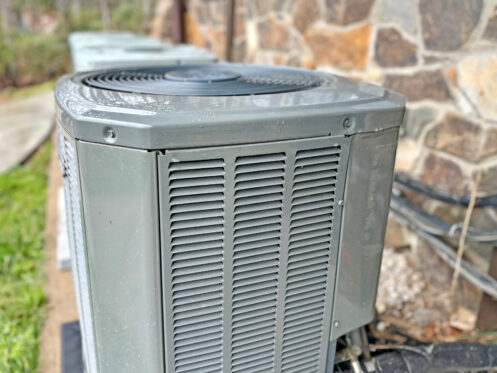
Because manufacturers no longer produce R-410A, every new AC they build must abide by that change. Since air conditioning units run off a specific refrigerant type, models must upgrade to use A2Ls. When you opt for your next AC installation, you will have to purchase a newer model that uses A2Ls.
The Rise of A2L Refrigerants
R-32 and R-454B are two new additions to the AC refrigerant genre. These fluids rate much lower on the GWP scale. Testing has indicated that A2Ls contribute significantly less to the greenhouse effect. They’re also more efficient at transferring heat. This can lead to improved performance for your system while also reducing electricity use. Because they have different ratings and safety risks, new AC units typically include advanced sensors. These sensors pick up on any sort of leak and turn your equipment off immediately.
Chemical Composition and Flammability Classifications
The transition to A2L refrigerants introduced a shift in the flammability classification system that ASHRAE utilizes. The R-410A it replaces carries a classification as a non-flammable (A1) substance. A2L refrigerants, including R-454B and R-32, carry a “mildly flammable” classification. These ratings rely on a flame propagation spread speed test. The A2L class can technically hold and spread a flame. Consequently, new AC units built to A2L specifications must utilize spark-proof components. To ensure system safety, these units include sealed contactors and brushless DC motors.
The molecular structure of A2Ls also differs from that of previous refrigerants. This structure allows for a lower charging volume. Therefore, A2L models require a smaller charge to achieve the same cooling capacity. Lowering the chemical volume helps reduce the environmental impact of the substance. However, this change requires more precise measuring and specialized safety features within the units.
Integrated Mitigation Systems and Sensor Logic
To manage the mildly flammable nature of A2L fluids, manufacturers have integrated other mandatory features. Modern evaporator coil assemblies now include Mitigation Board logic. These systems utilize highly sensitive refrigerant sensors to detect concentration levels. Any concentration must remain below the Lower Flammability Limit (LFL) to avoid triggering the mechanism. When a sensor detects a leak, it sends a signal to the board immediately. The system then provides constant airflow to prevent the buildup of flammable liquid. The main AC function stops, but airflow continues for safety purposes.
Skilled technicians must verify the calibration of these sensors during installation and maintenance. Our professionals ensure the safety of your system through these checks. This oversight is also one of the reasons both manufacturing and retail costs are higher for A2L-class AC models.
How Regulations Affect Your Current AC Unit
It’s perfectly fine if your existing AC still uses R-410A or any other type of R-410A. If your AC remains in working order and doesn’t suffer refrigerant loss, you can use it indefinitely. The issue will be when you call for an AC repair, and we need to replace your refrigerant. Soon, professionals will not be able to source R-410A. Replacement of your current equipment will be inevitable.
Environmental Impact and Global Goals
The American Innovation and Manufacturing (AIM) Act is the reason this is happening. The United States needs to meet international agreements to reduce HFC consumption by 85% by 2036. By phasing out the previous refrigerant, the country will likely reach that number well in advance of the deadline. As it pertains specifically to the HVAC industry, this only affects air conditioning units.
When you choose a modern, eco-friendly cooling system, you are directly contributing to these environmental goals. A2Ls don’t linger in the atmosphere like R-410A. They have a much lower thermal impact. This is a positive step toward sustainability. If you are an eco-conscious homeowner, then this is great news for you, especially considering the improved energy performance of the new units.
Long-Term Financial Planning for Homeowners
Because the transition is currently in full swing, now is the time to start planning your long-term HVAC budget. At some point, it is highly likely that you will need a new AC system. Whether your old one fails or you just want improved efficiency, it’s good to consider what’s available. Keep in mind, new models are initially going to cost quite a bit more than older models.
We recommend scheduling a professional inspection to see where your system currently stands. We offer flexible financing options on approved credit. Considering this process now saves you from having to decide under pressure later.
The Benefits of Staying Up-to-Date
In many cases, the cooling process you use may not change right now. The real impact occurs when you need a new AC or refrigerant recharge. This is a beneficial change for everyone in the long run. Newer models consume less electricity and have better heat transfer and SEER2 ratings. While they cost more upfront, you’ll likely pay less on a month-to-month basis for energy.
Impact on SEER2 Ratings and Static Pressure Efficiency
The shift to A2L refrigerants coincides with updated SEER2 (Seasonal Energy Efficiency Ratio 2) testing. The Department of Energy mandates this testing for all such appliances in the US. R-32 and R-454B have superior heat transfer coefficients compared to R-410A. This difference allows new units to utilize compact heat exchangers that use less energy. Overall, this improved thermal conductivity reduces the workload of the compressor motor. The result is a unit that draws lower amperage during peak usage periods. For homeowners in Hillsboro, this translates to more efficiency and better humidity control.
The benefits are numerous based on the increased efficiency alone. Beyond potentially lower energy bills, your footprint shrinks exponentially. You use less electricity overall because the unit requires less power to run. No existing R-410A-class machine can provide this specific benefit.
At Pro Heating and Cooling, Inc., we’re a full-service HVAC company ready to assist you with all things home comfort. Our certified technicians have ample experience in the field and are knowledgeable about industry changes. When you need to update your AC unit, we take proper load calculations and situate you with an ideal unit for your residence. Our service is fast, reliable, and we’re always upfront and never tack on hidden fees. When you’re considering a new AC unit, consider us for the task. Contact Pro Heating and Cooling, Inc. today for more information about refrigerant changes and how it affects you in Hillsboro.